
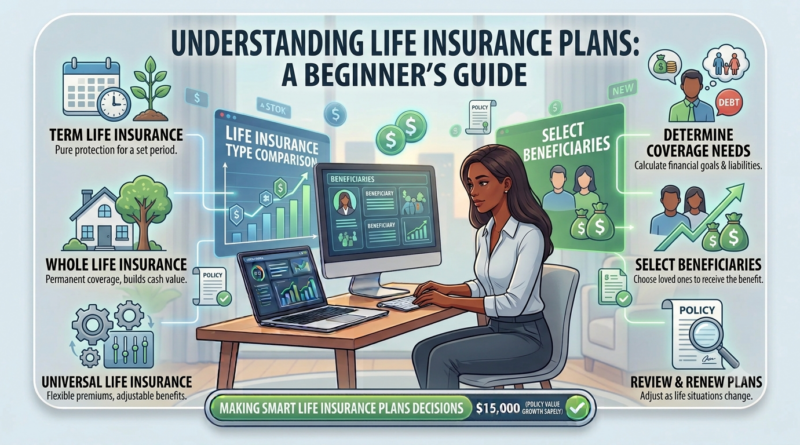
Understanding Life Insurance Plans: A Beginner’s Guide
When you get married or start a family, you spend a lot of time planning for the good things: buying your first home, welcoming a baby, or taking unforgettable vacations. But part of building true financial security for families means looking at the whole picture—even the parts that are uncomfortable to think about.
It is completely natural to avoid talking about death. However, setting up a clear safety net before tragedy strikes is one of the most selfless, protective acts you can perform for the people you love. If a family member or spouse passes away, the emotional grief is staggering. If you add a sudden financial crisis to that grief—like an inability to pay the mortgage, buy groceries, or cover funeral costs—a terrible situation becomes completely overwhelming.
Understanding life insurance plans and estate planning basics isn’t about being morbid. It is about creating a financial shield around your home so that your loved ones have the space and security they need to heal, no matter what tomorrow brings. Let’s demystify exactly how these protective tools work.
1. What is Life Insurance? (The Financial Umbrella)
At its core, a life insurance policy is a legal contract between you and an insurance company. You agree to pay a small, regular fee called a premium. In exchange, the insurance company promises that if you pass away while the policy is active, they will hand a tax-free lump sum of money directly to the person you choose, known as your beneficiary.
The Umbrella Analogy: Think of a life insurance premium like buying a high-quality umbrella. You hope it stays folded up in your closet and you never face a storm. But if a torrential downpour arrives, that umbrella keeps your entire family dry. You aren’t buying the insurance for yourself; you are buying it to shield the people left standing under the rain.
   [ Your Monthly Premium ] ===> ( Insurance Policy Bubble )
                                           ||
                                 ( If Tragedy Strikes )
                                           ||
                                           ▼
   [ Tax-Free Lump Sum Cash ] ===> Sent Directly to Your Beneficiary
Who Needs It?
A common misconception is that you only need life insurance if you have children. While supporting dependents is the number one reason people buy cover, it is highly valuable for young couples without kids too. If you share a mortgage, a car loan, or lease an apartment together, the sudden loss of one income can instantly ruin the survivor’s finances. Furthermore, standard funeral and burial costs globally can run into thousands of dollars—an expense no grieving spouse should have to pay out of pocket.
2. Term vs. Permanent Life Insurance: The Core Choice
When exploring options for your family, you will primarily choose between two completely different types of insurance structures.
Option A: Term Life Insurance (Pure Protection)
Term life insurance is the most popular, straightforward, and affordable path for absolute beginners.
- How it Works: You buy cover for a specific “term” or block of time—typically 10, 20, or 30 years. If you pass away during that window, your beneficiary receives the cash. If the term ends and you are still healthy, the policy simply expires.
- The Cost: Because it has an expiration date, it is incredibly cheap. Healthy young adults can often secure hundreds of thousands of dollars in coverage for the cost of a couple of takeout coffees a month. It is designed to cover the years when your financial liabilities are highest—like when you are raising young kids or paying off a 30-year home loan.
Option B: Permanent Life Insurance (Protection + Savings)
Permanent insurance (often called Whole Life or Universal Life) is a more complex financial product designed to last your entire life.
- How it Works: There is no expiration date. As long as you pay your premiums, the policy will eventually pay out when you pass away.
- The Cash Value Component: A portion of your premium is diverted into a built-in savings or investment account that builds cash value over time. You can eventually borrow against this cash value or cash it in later in life.
- The Catch: Because it guarantees a payout and includes an investment feature, permanent life insurance premiums can be five to ten times more expensive than term life insurance for the exact same amount of death protection.
3. Side-by-Side Comparison: Term vs. Permanent
| Feature | Term Life Insurance | Permanent (Whole) Life |
| Duration | Covers a specific window (e.g., 20 years). | Covers your entire life. |
| Premium Cost | Very low and affordable for beginners. | High, because it bundles an investment product. |
| Cash Value | None. It is pure insurance. | Yes. Builds an investment balance over time. |
| Best For | Replacing income during peak mortgage/parenting years. | Long-term wealth transfer or complex tax planning. |
4. How Insurance Companies Calculate Your Cost
You cannot simply pick a life insurance payout amount off a shelf and pay a flat fee. Insurance companies use mathematical experts called underwriters to calculate your specific risk level. Your premium is calculated using four core inputs:
- Age: The younger you are when you buy a policy, the cheaper your premiums will be.
- Health History: You will typically complete a detailed health questionnaire, and many companies require a basic medical exam (checking your blood pressure, height, weight, and blood work).
- Smoking Status: Smoking or vaping heavily impacts your lifespan statistics. Smoker premiums are frequently double or triple the price of non-smoker premiums for the exact same coverage.
- Occupation and Hobbies: If your job involves extreme physical risk (like deep-sea commercial diving) or your hobbies include skydiving, your premiums will reflect that hazard.
Pro-Tip on Workplace Policies: Many employers offer free or cheap life insurance as part of your employee benefits package. While you should absolutely sign up for it, do not rely on it as your only safety net. If you lose your job, shift careers, or face a medical issue that forces you to leave the workforce, that coverage vanishes instantly. Securing a private, individual policy ensures your protection stays with you no matter where you work.
5. Case Studies: The Power of Planning
Let’s look at how two families navigated unexpected tragedies based on their approach to financial planning.
Case Study 1: The Unprotected Crisis (Marcus and Chloe)
Marcus and Chloe were in their late 20s with a toddler and a brand-new home mortgage. They thought about looking into life insurance but decided to delay it until they were older and earning more money.
- The Tragedy: Marcus was unexpectedly killed in an automobile accident.
- The Financial Fallout: Chloe was left to manage a massive monthly mortgage and childcare costs entirely on her single salary. Overwhelmed by debt during her deepest period of grief, she was forced to sell their family home in a hurry, uproot her child, and move in with relatives to survive financially.
Case Study 2: The Insulated Recovery (Sarah and David)
Sarah and David bought a 20-year term life insurance policy worth $500,000 when their first child was born, paying a modest $30 a month.
- The Tragedy: David passed away suddenly from an undiagnosed heart condition five years later.
- The Financial Fallout: While Sarah faced an agonizing emotional loss, her life insurance claim was processed within weeks. The $500,000 tax-free payout allowed her to pay off the remaining balance of their mortgage instantly and set aside a college fund for their child. She was able to take extended time off work to grieve and support her family without checking her bank balance in a panic.
6. Beyond Insurance: Estate Planning Basics
Understanding life insurance plans is only half the battle. The money from a policy needs a clear pathway to be distributed properly. That is where estate planning basics come into play.
The Power of a Will
A will is a legal document that states exactly who gets your assets (your money, home, personal belongings) and, most importantly, who will step in as the legal guardian of your minor children if both parents pass away.
If you die without a will (known legally as dying intestate), you hand all control over to a government court system called probate court. A judge who has never met your family will decide who raises your kids and how your money is carved up. This legal process can take months or years, freezing your bank accounts and draining your family’s remaining wealth in court fees.
   [ With a Legal Will ]    ===> Assets and Guardian chosen by YOU instantly.
   [ Without a Legal Will ] ===> Frozen Accounts + Months of Probate Court Battles.
Note: While you can technically write out your basic wishes on a piece of paper, sign it, and date it, it is incredibly easy to make technical errors that render it invalid in court. It is always best to use a registered legal service or an estate attorney to formalize your will.
7. Global Variations in Estate Law
The core concepts of protecting your family remain steady across the globe, but the structural legal names shift across borders:
- United States: Families frequently pair a will with a Living Trust to bypass the expensive and public probate court process entirely, allowing assets to pass seamlessly to beneficiaries.
- United Kingdom: Payouts from life insurance policies can sometimes be lumped into your total estate and hit with a hefty Inheritance Tax (IHT). To avoid this, smart UK planners write their life insurance policies “in trust,” ensuring the money goes straight to the beneficiary tax-free without waiting for probate.
- Canada: Canada does not have a formal “estate tax,” but it does trigger a Deemed Disposition tax upon death, viewing your assets as if they were sold the day you passed away. Having life insurance cash available helps your heirs pay this sudden tax bill without needing to sell off family land or homes.
- Australia: Australia has no formal inheritance or death taxes, but superannuation funds (your retirement pots) carry specific rules about who can be named a “dependent” to receive tax-free death benefits.
Pro-Tips and Common Pitfalls to Avoid
- Pro-Tip: Use the “10x Income” Rule of Thumb. If you aren’t sure how much coverage to buy, start by multiplying your current annual salary by 10. If you earn $50,000 a year, look for a $500,000 policy. This gives your family a ten-year financial cushion to replace your economic value.
- Pitfall: Disclosing Inaccurate Information. Never lie on your insurance health questionnaire about your weight, medical history, or smoking habits to secure a cheaper rate. If you pass away and the insurance company discovers you hid a medical condition, they have the legal right to cancel the policy and refuse to pay your family a single dollar.
- Pro-Tip: Review Your Policies During Major Life Shifts. Do not set your policy and forget it forever. Revisit your coverage details every time you experience a major milestone: getting married, buying a home, changing careers, or having another child.
- Pitfall: Price Shopping Too Extensively. Because coordinating medical exams and getting official quotes takes significant time, do not try to compare dozens of companies. Pick three top-rated, financially stable insurance providers, compare their core rates, and make your decision.
Quick Action Checklist
Ready to protect your family’s future? Complete these essential steps to get your safety net up and running:
- [ ] Calculate Your Debt and Income Needs: Add up your mortgage balance, personal debts, and funeral costs, then add ten times your income to find your target insurance target number.
- [ ] Gather Medical Information: Write down your personal medical history, current height/weight, and any family medical conditions so you can fill out applications accurately.
- [ ] Compare Three Providers: Request direct quotes for a term life insurance policy matching your target timeline (e.g., a 20-year term) from three trusted, highly rated providers.
- [ ] Draft a Guardian Plan: Sit down with your partner or family to agree on who you would trust to raise your children if the worst occurred, and confirm that individual is willing to take on the responsibility.
- [ ] Establish a Basic Will: Use a trusted digital legal template tool or schedule a consultation with an estate planning attorney to put your wishes into a legally binding document.