What Is a Commercial Bank? A Beginner’s Guide to Banking
When you think of a bank, you probably picture the place where you deposit your birthday cash, swipe a debit card, or log into an app to check your balance. But behind the scenes, the banking world is divided into different types of institutions designed for different purposes.
If you are a teenager starting a side hustle, an absolute beginner to finance, or a new business owner, understanding what is a commercial bank is a vital step in mastering your money. These institutions act as the financial engine for both everyday people and massive corporations.
Let’s dive into exactly what these banks do, the banking services explained in plain language, and how to find the best place to keep your money.
The Basics: What is a Commercial Bank?
A commercial bank is a financial institution that accepts deposits from the public and gives out loans to individuals and businesses. Think of them as the giants of the financial world. You have likely seen their logos on skyscrapers or apps: global examples include Bank of America, Chase, Barclays in the UK, RBC in Canada, and Commonwealth Bank in Australia. (Note: Wachovia was historically one of these massive entities before merging into Wells Fargo).
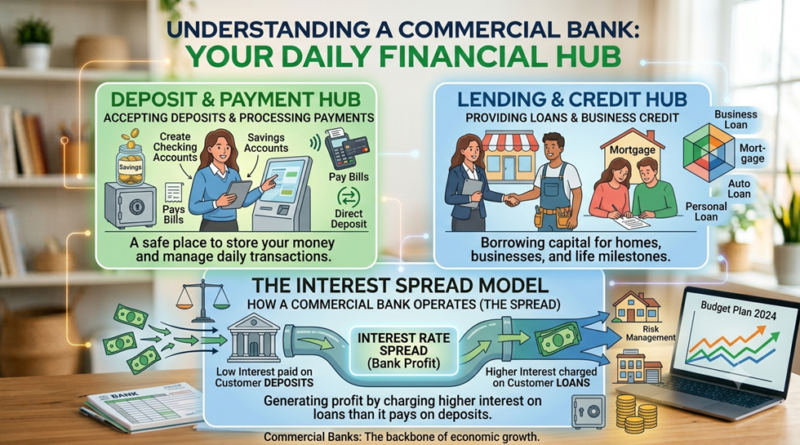
Unlike central banks (which are run by governments to manage a country’s entire economy), commercial banks are regular businesses. Their goal is to make a profit, mostly by charging more interest on loans than they pay you for keeping your money with them.
[ Depositors ] ───> Put Money In (Low Interest) ───> [ Commercial Bank ]
                                                            │
[ Borrowers ]  <─── Takes Loans Out (High Interest) <───────┘
1. Essential Services for Individuals and Businesses
Commercial banks wear two hats: they serve everyday people (called retail banking) and they serve businesses (called commercial banking). When choosing the right bank, it helps to know what tools they offer for each side.
Services for Regular People
For individuals, commercial banks provide the digital and physical tools needed to navigate daily life:
- Checking Accounts: A transactional account used for your daily spending, debit card swipes, and ATM withdrawals.
- Savings Accounts: A place to park your money to earn interest over time.
- Digital Tools: Modern financial tools like state-of-the-art mobile apps and automated accounting software links.
Services for Businesses
For companies—ranging from a local trucking company or seafood distributor to a massive manufacturing plant—commercial banks offer heavy-duty corporate infrastructure:
- Payment & Merchant Systems: The hardware and software a business rents to safely process customer credit cards, debit cards, and ATM transactions.
- Capital Raising: Helping businesses secure massive pools of cash to expand operations or buy new factories.
- Financial Advisory: Specialized consultants who advise businesses on mergers, global trade laws, and managing corporate wealth.
2. Advanced Business Solutions: Cash Flow & Asset Protection
One of the most valuable secrets of a commercial bank is how it helps businesses survive during tough months. A business might be incredibly successful but still run out of cash if its customers take too long to pay their bills.
Accounts Receivable Loans Explained
To solve this cash crunch, commercial banks offer a customized borrowing tool called an accounts receivable solution.
What are Accounts Receivable? This is simply a fancy term for “money that customers owe to a business for work already completed.” If a manufacturing plant delivers $10,000 worth of parts to a buyer, they issue an invoice. That invoice is an asset, but the plant can’t use an invoice to pay its own workers this week.
Here is how a commercial bank steps in to bridge the gap:
1.Credit Risk Assessment:Step 1.
The bank analyzes the regular customers of the business and sets safe purchase limits based on their credit risk (how likely they are to pay their debts).
2.Invoice Submission:Step 2.
The business delivers its goods to a customer and sends a copy of the invoice to the commercial bank.
3.Cash Advance:Step 3.
Instead of waiting 30 or 60 days for the customer to pay, the commercial bank immediately advances up to 90% of the invoice amount in cash to the business.
4.Final Settlement:Step 4.
When the customer finally pays the bill, the bank takes its remaining percentage plus a small fee for the service, keeping the business’s cash flowing smoothly.
Commercial Insurance Products
Protecting a business’s daily operations is in the bank’s best interest—if a business loses its assets, it cannot pay back its loans. Because of this, many large commercial banks offer corporate insurance policies. These protect against a wide variety of sudden disasters, including:
- Theft, burglary, and vandalism.
- Natural disasters like fire and lightning.
- Accidental property damage, equipment breakdown, and operator errors.
3. Commercial Banks and the Financial System
Have you ever wondered why people trust banks with their life savings? It is because commercial banks do not operate in a vacuum. They are strictly regulated by a central government authority.
In the United States, this system is run by the Federal Reserve System (often called “the Fed”). The Fed acts as the ultimate “bank for banks” and oversees 12 regional Federal Reserve districts to ensure local banks are stable.
The Cost and Perks of System Membership
To become an official member of the Federal Reserve System, a commercial bank has to buy stock in its regional Reserve Bank equal to 3% of its own combined capital and surplus. This isn’t a simple expense; it comes with major benefits:
- Dividends: The commercial bank receives a guaranteed 6% annual dividend on that stock.
- Voting Rights: The bank gets the right to vote in elections for the directors of its regional Reserve Bank.
How Central Banking Protects Consumer Confidence
Commercial banks provide the central banking system with steady cash streams, which in turn allows the government to steady the global economy. Central banking systems protect your money by:
- Regulating Money Supply: Buying and selling government securities to control how much money is floating around.
- Issuing Currency: Printing the actual cash you use every day.
- Defending Currency Value: Trading on global foreign exchange markets to protect the purchasing power of the national currency.
- Safekeeping: Holding global assets, including storing physical gold bars for foreign governments and international agencies.
4. Alternatives: Choosing the Right Bank for You
While commercial banks offer amazing tech and global reach, they are not your only choice. If you are an individual or a small business looking for the highest savings interest rates or the lowest loan fees, you need to shop around.
| Type of Bank | Best Known For | Potential Downside |
| Commercial Banks | Cutting-edge apps, global ATMs, vast business services. | Higher monthly fees, lower interest rates on regular savings. |
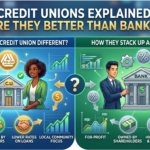
| Credit Unions | Local, member-owned non-profits with lower loan rates. | Fewer physical branches, older mobile app technology. |
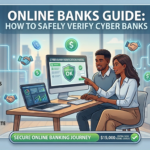
| Online Banks | High-Yield Savings Accounts (HYSAs) with excellent rates. | No physical branches to visit; cannot deposit physical cash easily. |
| Private Banks | Highly customized, one-on-one wealth management. | Requires a very high minimum balance (often $1M+). |
Pro-Tip: If you are a teenager or absolute beginner looking for a place to put your personal savings, look closely at online banks (also called branchless banks). Because they do not have to pay for expensive physical buildings, they pass those savings on to you by offering much higher interest rates on your deposits!
Quick Action Checklist
Use this checklist to evaluate where your money is parked and maximize your banking setup this week:
- [ ] Step 1: Look up your current bank account online. Check if you are being charged a monthly maintenance fee or an ATM fee.
- [ ] Step 2: Locate your account’s interest rate (APY). If it is less than 1-2%, write that number down.
- [ ] Step 3: Compare that rate against 2 local credit unions or online-only banks to see if your savings could be growing faster elsewhere.
- [ ] Step 4: If you are launching a business or side hustle, make a list of your monthly invoice volume to see if an accounts receivable solution could help you scale up.