Online Banks Guide: How to Safely Verify Cyber Banks
Switching to a purely branchless, digital platform is one of the most effective ways to upgrade your daily financial habits. Because they do not have to pay for expensive brick-and-mortar buildings or cash-handling staff, online banks can pass those massive overhead savings directly to you by offering incredibly low account fees and highly competitive interest rates on loans and savings.
However, navigating the internet safely requires a strict baseline of digital literacy. If you are an absolute beginner or a teenager building a beginner portfolio guide, using an online banks guide to verify where you store your cash is critical to keeping your wealth secure.
While advanced digital infrastructure has made the web highly safe for everyday transactions, it has also given rise to advanced identity thieves and imposter websites. Let’s look at how to verify a digital bank, protect your personal data, and separate safe deposits from investment risks.
1. Spotting the Imposters: The Verification Blueprint
As digital marketing tools become more sophisticated, financial scammers can easily build copycat websites that flawlessly mimic the logos, colors, and design layouts of credible financial institutions. Some fraudulent websites even paste fake federal insurance badges on their pages to trick unsuspecting consumers.
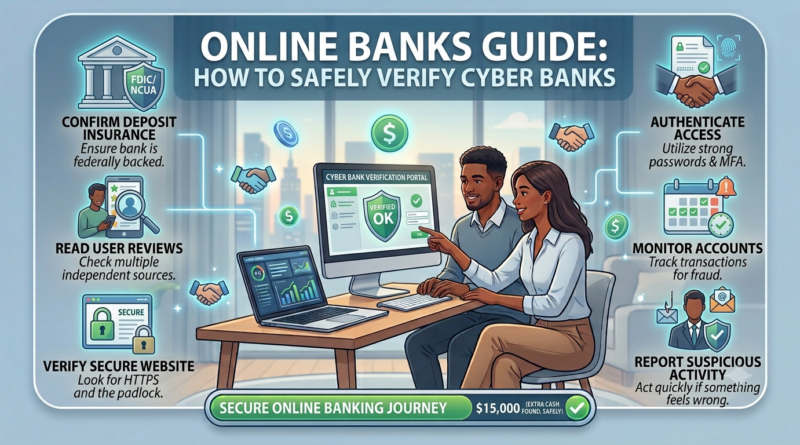
Never assume a digital bank is legitimate just because its website looks professional or displays a federal logo. Use this strict verification framework before moving any cash:
1.Locate Official Bank Details:
Scroll to the absolute bottom of the online bank’s homepage. Look for their legal corporate name, headquarters address, and their unique FDIC certificate number.
2.Use the Federal Directory Tool:
Bypass the bank’s website entirely and go directly to the official government regulator portal. Use the FDIC BankFind search tool to look up the institution’s legal name and confirm they are actively registered and insured.
3.Test Customer Service Portals:
Locate the website’s customer support department. Call their listed phone number or start a secure live chat. Ask direct questions about their regulatory agencies, physical address, and corporate history to verify you are speaking with an authentic representative.
4.Demand Written Disclosures:
Request a full, downloadable copy of the bank’s terms, fee schedules, and account regulations in writing. Legitimate digital institutions will easily provide these transparent disclosures up front to back up their high-yield promotions.
2. Separate Safe Cash Deposits from Investment Risks
Once you confirm an online bank is legitimate, you must understand exactly which financial products inside that bank are protected. Federal deposit insurance is highly specific and does not apply to everything a bank sells.
       ┌───────────────────────────────┴───────────────────────────────┐
       ▼                                                               ▼
[ FDIC-Insured Products ]                                 [ NON-Insured Products ]
(100% Protected against bank failure)                      (Subject to market loss and depreciation)
   • Checking Accounts                                       • Mutual Funds & Stocks
   • High-Yield Savings Accounts                             • Annuities & Bonds
   • Certificates of Deposit (CDs)                           • Life Insurance Policies
If a branchless bank goes bankrupt, the federal government steps in to completely protect and return your cash held in standard checking or savings accounts up to legal limits. However, if you purchase stocks, mutual funds, annuities, or life insurance policies through that same bank’s website, those assets are not insured. They are tied directly to financial market fluctuations and can decrease in value.
3. Digital Privacy and Consumer Rights
A legitimate online bank should give you total, uncompromised control over your personal account security and digital privacy. When evaluating a new provider, look closely at their fine print to ensure they uphold these three non-negotiable data-security standards:
- Total Information Privacy: Review the bank’s official privacy policy. Ensure they explicitly guarantee that they will never sell or rent your email address, phone number, or personal contact information to third-party online marketing websites.
- Autonomous Security Access: The platform must allow you to instantly update and change your PIN numbers, passwords, and multi-factor access codes at any time from your private profile dashboard.
- Zero-Penalty Flexibility: A customer-focused digital bank will allow you to adjust your service tiers, close sub-accounts, or move your capital without charging predatory cancellation fees or exit penalties if you are unsatisfied with their service.
Quick Action Checklist
Ready to secure your digital financial footprint? Work through these immediate action steps today:
- [ ] Step 1: Open a fresh web browser tab and head over to the official government FDIC BankFind website.
- [ ] Step 2: Type in the name of your current financial institution to verify its active insurance standing and official certificate number.
- [ ] Step 3: Log into your primary email account and search your inbox for your bank’s latest updated privacy policy statement.
- [ ] Step 4: Navigate to your bank’s security settings page and update your account password to a strong, unique phrase to build better smart investing habits.
- [ ] Step 5: Locate the consumer disclosure document for any investment products you own to confirm which funds are exposed to market risk versus cash safety.