
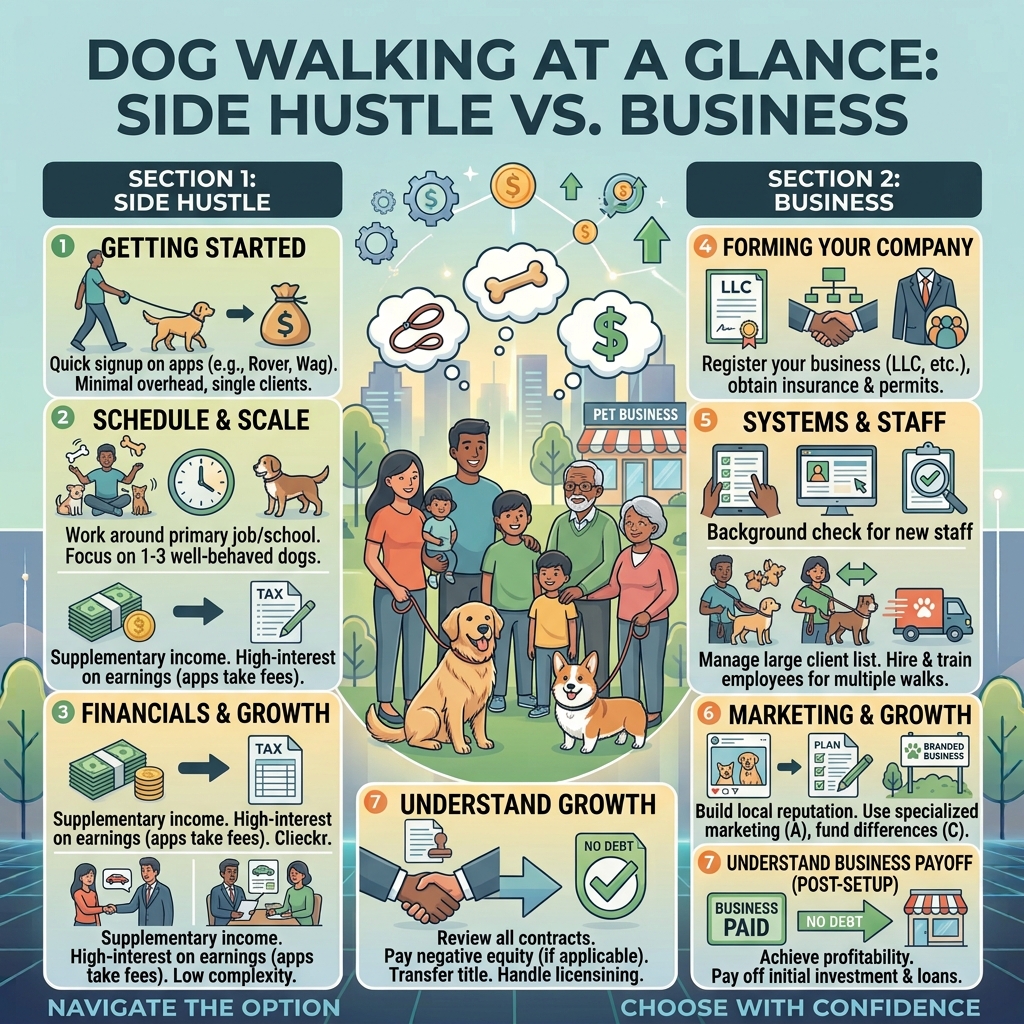
Dog Walking at a Glance: Side Hustle vs. Business
Starting a dog-walking journey—whether for extra pocket money or as a full-time business venture—blends active outdoor work with pet care. While it is a flexible and rewarding side hustle, turning it into a stable income requires an understanding of platform mechanics, safety, liability, and business growth.
Dog Walking at a Glance: Side Hustle vs. Business
                       [How Do You Want to Walk?]
                                    │
         ┌──────────────────────────┴──────────────────────────┐
  SIDE HUSTLE / PART-TIME                               INDEPENDENT BUSINESS
         │                                                     │
  • On-demand apps (Rover, Wag!)                        • Direct client billing & custom rates
  • Built-in insurance & processing                     • Private insurance (PCI / Business liability)
  • Platform fees (15%–40% cut)                         • 100% earnings retention
  • ~15–20 hrs/week (~$200–$400/wk)                      • Scalable (sitters, add-on services, merch)
1. Starting as a Side Hustle (App-Based)
For beginners, using established pet care platforms removes the friction of payment processing, booking logistics, and initial marketing.
Top Platforms & Platform Fees
| Platform | Best For | Typical Rate (30-Min Walk) | Platform Take Rate | Features |
| Rover | Recurring clients & setting custom rates | $20 – $35 | 20% commission | Direct client communication, custom service tiers |
| Wag! | On-demand & same-day bookings | $20 – $29 | 30% – 40% commission | Live GPS tracking, lockbox access, in-app report cards |
| Care.com | Long-term family/pet arrangements | $18 – $25 | Subscription model | Direct hiring board, background check badges |
Earning Potential
- Average Hourly Rate:Standard U.S. rates range between $15.00 and $22.00 per hour depending on your location and experience.
- Weekly Earnings:Part-time walkers averaging 8 to 12 walks per week routinely earn $150 to $300/week, plus optional tips (which stay 100% with the walker on major apps).
2. Launching an Independent Dog-Walking Business
If you want to bypass platform commission fees and build a full-time career, transitioning to an independent business allows you to keep 100% of your earnings and scale operations.
1.1. Secure Business & Liability Insurance:Protect yourself and your clients.
Never walk client dogs without private commercial liability insurance (e.g., Pet Care Insurance or Business Insurers of the Carolinas). Standard policies cost $150–$300/year and cover medical emergencies, property damage, and lost key replacement.
2.2. Secure Your First Direct Clients:Build trust in your immediate area.
Transition app clients who prefer working with you directly by offering slight discounts on weekly packages. Use localized word-of-mouth, flyers at local vet offices/dog parks, and community groups (Nextdoor, local Facebook pet groups).
3.3. Build Digital Branding:Establish a professional web presence.
Create a clean Google Business profile, a dedicated booking website (via platforms like Time To Pet or Pocket Suite), and a public social media profile sharing photos, videos, and client testimonials.
4.4. Expand Service Offerings:Increase revenue per client.
Introduce high-margin add-ons such as drop-in feedings, overnight pet sitting, taxi services to groomers/vets, and curated treats or branded accessories.
3. Essential Safety, Risk, and Neglect Protocol
Handling animals requires constant vigilance. Being prepared for emergencies protects both you and the dogs under your care.
Handling Unfamiliar Dogs
- Temperament Test: Always conduct an initial “Meet & Greet” with the owner present before accepting a new client. Observe how the dog reacts to leashes, doorbells, and street distractions.
- Leash Equipment: Always check collars and harnesses for wear and tear before leaving the house. Never use retractable leashes for powerful or reactive breeds.
Identifying and Reporting Animal Neglect
Full-time pet care providers occasionally encounter pets suffering from owner neglect.
                                  [Signs of Neglect]
                                          │
    ┌─────────────────────────┬───────────┴───────────┬─────────────────────────┐
    │                         │                       │                         │
Severe Underweight     Untreated Injuries     Constant Fear/Alarm     Unsanitary Living
(Ribs/Spine Visible)    or Open Wounds        Around Owner            Conditions / No Water
Crucial Protocol: Do not confront an abusive or neglectful owner directly, as this can escalate danger for both you and the pet. Document conditions with timestamped photos/notes and file an anonymous report with your local Animal Control Agency, Humane Society, or local law enforcement authorities.
Frequently Asked Questions
Do I need professional certifications to start?
No formal license is legally required to walk dogs in most jurisdictions. However, holding certifications in Pet First Aid & CPR (via the American Red Cross) or completing training through Pet Sitters International (PSI) significantly builds client trust and allows you to charge premium rates.
How many dogs can I walk at once?
While group walking increases hourly yield, most city ordinances restrict individual walkers to a maximum of 3 to 4 dogs at one time. Beginners should always stick to walking one dog at a time until they understand leash mechanics and pack dynamics.
Quick Action Checklist
- [ ] Pass Background Check: Complete identity verification on Rover or Wag! to start walking part-time.
- [ ] Get First Aid Certified: Complete an online or local Pet First Aid & CPR course.
- [ ] Purchase Business Insurance: If taking private clients, secure a basic liability policy.
- [ ] Assemble a Walker Kit: Pack spare slip-leads, waste bags, a portable water bowl, pet-safe sanitizer, and high-value treats.
Disclaimer: The content on this website is for informational and educational purposes only and should not be construed as professional financial, investment, tax, or legal advice. I am not a licensed financial advisor. While I strive to keep the information accurate and up to date, financial markets and laws change frequently. Always consult with a qualified financial professional before making any financial or investment decisions based on the information provided on this site.