
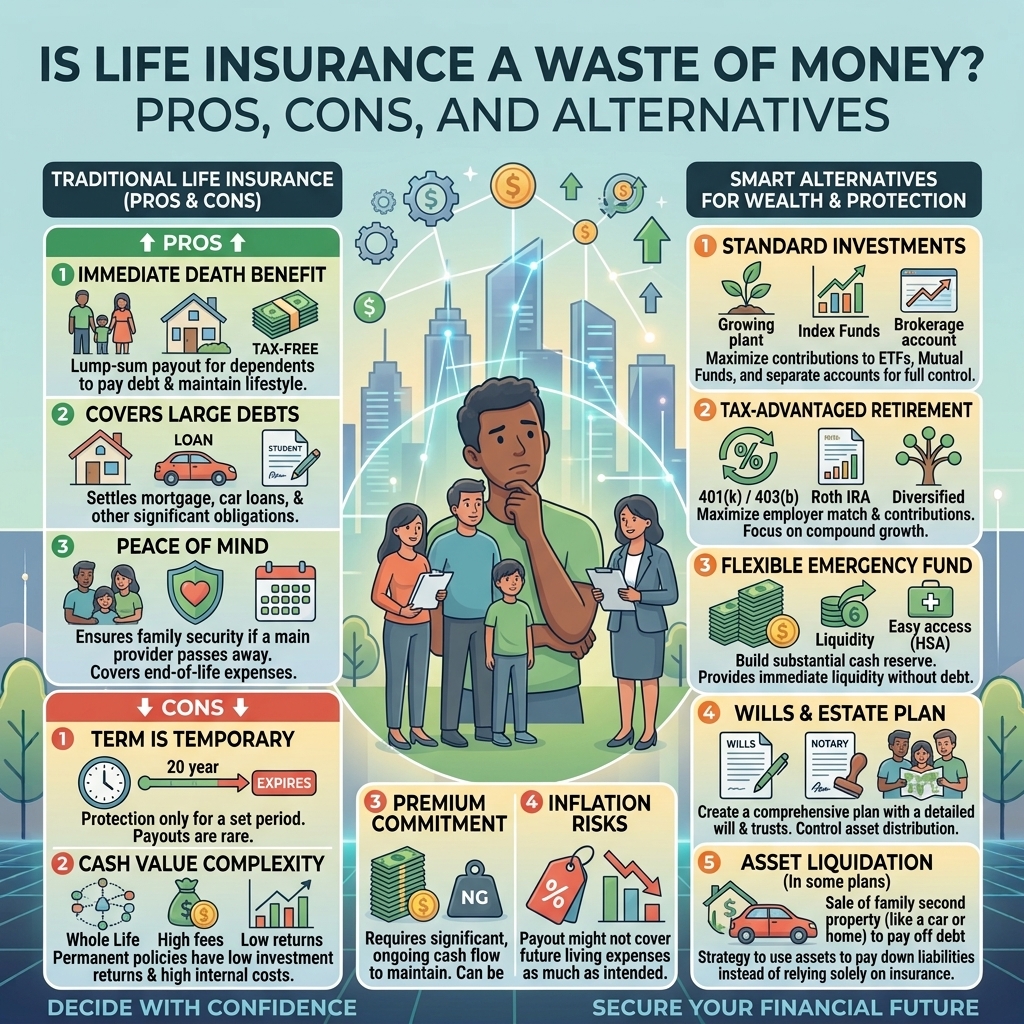
Is Life Insurance a Waste of Money? Pros, Cons, and Alternatives
When planning where to invest hard-earned money, buying a life insurance policy can sometimes feel like an unnecessary expense. A common belief persists that life insurance is only meant for wealthy families or that paying monthly premiums for a benefit you will never see personally is a poor use of capital.
As a result, many people prefer putting their cash into investments that deliver immediate, visible returns. However, the life insurance industry is far more versatile than most realize. When chosen correctly, a policy acts as an essential financial safety net, protecting your loved ones from severe financial hardship if the unexpected happens.
Whether you are deciding if coverage is worth the cost or trying to pick the right policy type, here is an honest look at how life insurance works, its pros and cons, and the best alternatives available.
What Is Life Insurance and How Does It Work?
At its core, a life insurance policy is a legal contract between you (the policyholder) and an insurance company. In exchange for regular payments called premiums, the insurer guarantees to pay a tax-free lump sum—known as the death benefit—to your designated beneficiaries when you pass away.
Life insurance generally falls into two primary categories:
[Life Insurance] ──┬──> Term Life Insurance (10–30 Year Duration / Lower Cost / Income Protection)
                   │
                   └──> Permanent Life Insurance (Lifetime Duration / Includes Cash Value / Higher Cost)
1. Term Life Insurance
- How it Works: Provides coverage for a set period, usually 10, 20, or 30 years.
- Best For: Short- to medium-term financial responsibilities, such as covering a home mortgage, replacing lost income while raising children, or protecting student loan co-signers.
- Key Advantage: It is straightforward and significantly less expensive than permanent insurance.
2. Permanent Life Insurance (Whole or Universal Life)
- How it Works: Covers you for your entire lifetime as long as premiums are paid on time.
- Best For: High-net-worth estate planning, lifelong dependents, or supplementing retirement savings.
- Key Advantage: It includes a cash value account that grows over time on a tax-deferred basis, which you can borrow against or withdraw while you are still alive.
5 Major Pros of Buying Life Insurance
When tailored to your specific financial situation, a life insurance policy provides several key benefits:
1. Completely Tax-Free Payouts
In most jurisdictions, the lump-sum payout your beneficiaries receive is exempt from income tax. Your family does not need to report the death benefit as taxable income, ensuring they keep 100% of the funds.
2. Long-Term Security for Your Dependents
If you are the primary earner in your household, your family relies on your income to pay for daily living expenses, housing, and education. A general financial rule of thumb recommends carrying coverage equal to 7 to 10 times your annual salary to ensure your family remains financially stable without your income.
3. Immediate Funeral and Final Expense Coverage
End-of-life arrangements, funerals, and burials can easily cost anywhere from $7,000 to $10,000 or more. Having a policy ensures your grieving family members do not have to borrow money or pay out-of-pocket for final medical and funeral bills.
4. Living Benefits for Chronic or Terminal Illnesses
Many modern policies offer optional policy add-ons called riders. An accelerated death benefit rider allows you to access a portion of your policy payout while you are still alive if you are diagnosed with a terminal or chronic illness, helping cover costly medical treatments or specialized care.
5. Supplemental Retirement Savings (Permanent Policies)
Permanent life insurance policies accumulate cash value over time. You can borrow against this cash value to fund a down payment on a home, cover emergency expenses, or supplement your income during retirement.
5 Common Cons and Pitfalls to Avoid
Life insurance usually feels like a waste of money when a buyer picks the wrong policy or mismanages their contract. Avoid these five common mistakes:
| Mistake / Pitfall | Why It Harms Your Finances | How to Avoid It |
| Buying the Cheapest Policy | Low-cost policies may lack adequate coverage amounts or essential riders. | Match your coverage limit to your actual financial liabilities, not just the lowest price tag. |
| Lapsing on Premiums | Missing premium payments can cause your policy to terminate, forfeiting previous payments. | Set up automated payments and confirm your insurer offers a grace period for missed payments. |
| Ignoring the Cash Value Component | Treating variable permanent insurance passively can lead to poor returns. | Monitor your policy’s underlying cash value accounts regularly and rebalance as needed. |
| Over-Borrowing From the Policy | Excessive policy loans reduce your final death benefit and can trigger tax liabilities if the policy lapses. | Keep policy loan balances low and establish a clear repayment plan. |
| Delaying Your Purchase | Premium rates rise significantly as you age or develop health conditions. | Lock in term rates in your 20s or 30s when you are healthiest and rates are lowest. |
Top Alternatives to Traditional Life Insurance
If you evaluate your needs and decide traditional life insurance is not right for you, consider these alternatives:
- High-Yield Savings & Investments: Building a self-funded investment portfolio allows complete control over your money, though it lacks an immediate lump-sum guarantee if you pass away early in the process.
- Annuities: Financial contracts offered by insurance companies that convert a lump sum into a guaranteed lifetime stream of retirement income.
- Income Protection & Critical Illness Insurance: Standalone policies that replace your monthly income or pay a lump sum if an injury or illness prevents you from working, though they do not pay out upon death.
- Employer Group Coverage (“Death in Service”): Many employers offer free or low-cost basic life insurance (often equal to 1x or 2x your salary) as a workplace benefit.
Decision Matrix: Who Actually Needs Life Insurance?
                  [Do you have financial dependents or joint debts?]
                                          │
                    ┌─────────────────────┴─────────────────────┐
                   YES                                         NO
                    │                                           │
      [Do your existing savings cover]              [Do you have unpaid debt or]
      [ your debts and income needs? ]              [ funeral costs to cover?  ]
           │                    │                        │             │
          YES                   NO                      YES            NO
           │                    │                        │             │
 ┌───────────────────┐  ┌───────────────┐        ┌───────────────┐  ┌──────────────────┐
 │ Self-Insured      │  │ Buy Term or   │        │ Buy Small Term│  │ Skip Insurance;  │
 │ (No Extra Policy  │  │ Permanent     │        │ or Final      │  │ Focus on General │
 │     Needed)       │  │ Coverage      │        │ Expense Cover │  │ Wealth Building  │
 └───────────────────┘  └───────────────┘        └───────────────┘  └──────────────────┘
You should strongly consider carrying coverage if you fall into any of these categories:
- Parents with minor children or adult children with special needs.
- Homeowners with a joint mortgage.
- Young adults whose parents co-signed private student loans.
- Primary earners supporting a stay-at-home spouse or elderly parents.
- Business owners with key partners or business loans.
Frequently Asked Questions
Can I get my money back if I cancel my life insurance policy?
If you have a term life policy, you will not receive your premium payments back if you cancel or outlive the term (unless you purchased a specific “Return of Premium” rider). However, if you surrender a permanent life policy, you are entitled to receive the accumulated cash value minus any surrender fees and outstanding policy loans.
Is life insurance considered a good investment?
Life insurance is primarily a risk management tool designed to protect dependents, rather than a pure growth investment. While permanent policies do offer a cash value component, traditional investment options like low-cost stock market index funds (ETFs) typically yield higher long-term market returns for pure wealth accumulation.
Quick Action Checklist
- [ ] Calculate Your Required Coverage: Multiply your annual salary by 7 to 10, then add outstanding mortgage balances and debts.
- [ ] Review Employer Benefits: Check if your employer provides free group life insurance to establish your baseline coverage.
- [ ] Compare Term vs. Permanent Quotes: Gather quotes from multiple top-rated insurers to find a policy fitting your budget.
- [ ] Name Primary and Contingency Beneficiaries: Ensure your policy paperwork explicitly names who should receive the tax-free payout.
Disclaimer: The content on this website is for informational and educational purposes only and should not be construed as professional financial, investment, tax, or legal advice. I am not a licensed financial advisor. While I strive to keep the information accurate and up to date, financial markets and laws change frequently. Always consult with a qualified financial professional before making any financial or investment decisions based on the information provided on this site.