
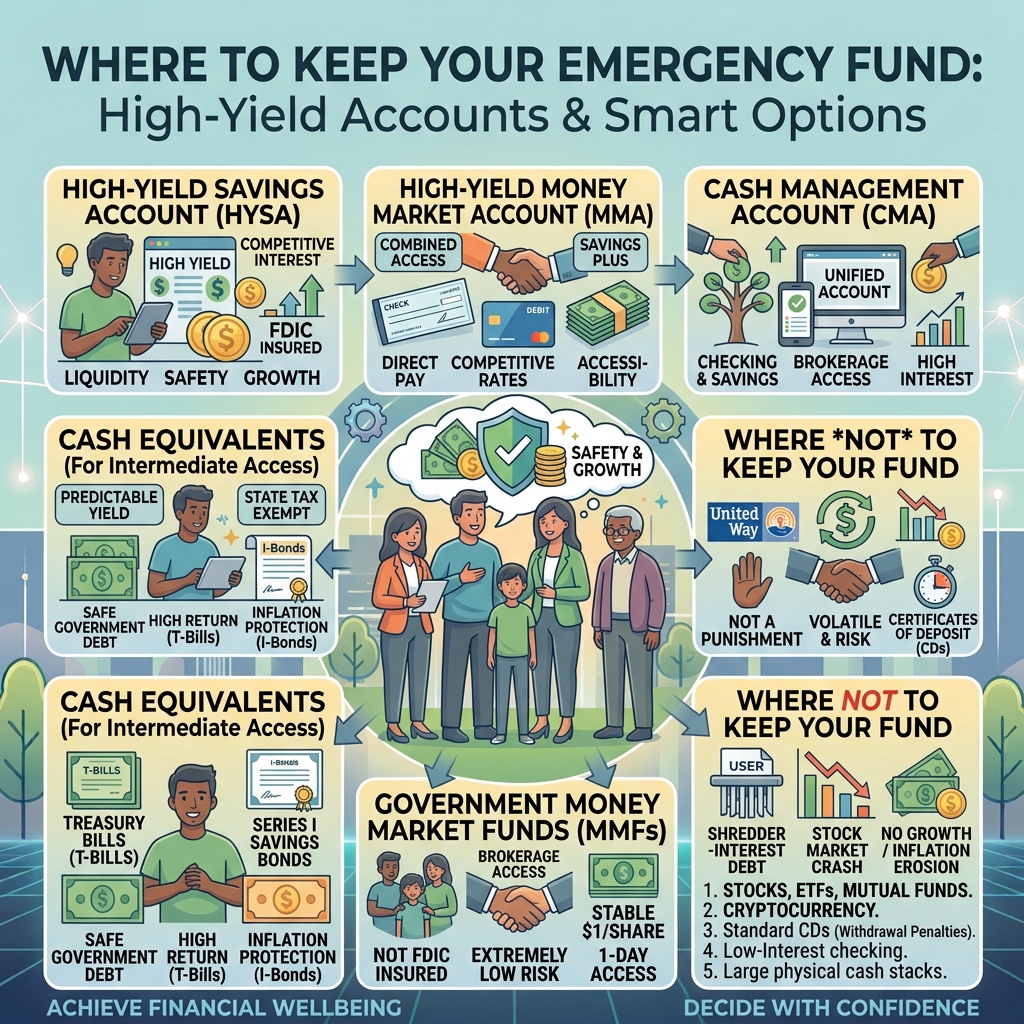
Where to Keep Your Emergency Fund: High-Yield Accounts & Smart Options
An emergency fund is one of the most critical components of a healthy financial foundation. It acts as a dedicated financial buffer for life’s unexpected curveballs—such as unexpected car repairs, urgent medical treatments, home maintenance, or temporary job loss.
However, simply stashing cash in a regular checking account or traditional low-yield savings account comes with a hidden cost: inflation. Over time, rising living costs erode the purchasing power of idle cash.
To protect your safety net, you need a strategy that balances three factors: safety, instant liquidity, and interest yield. Here is a complete guide to understanding emergency funds, how much to save, and the best places to store your money so it grows safely while remaining accessible.
What Is an Emergency Fund and How Much Do You Need?
An emergency fund is liquid cash set aside strictly for urgent, unforeseen, and non-discretionary expenses. It is separate from your daily checking account and regular vacation or goal savings.
[Target Emergency Reserve] ──┬──> 1. Starter Fund: $500 – $1,000 (Minor surprises)
                              └──> 2. Fully-Funded: 3 to 6 Months of Living Expenses
The 3-to-6-Month Benchmark
Most financial advisors recommend building an emergency reserve equal to 3 to 6 months of essential living expenses (covering mortgage/rent, basic groceries, utilities, debt minimums, and insurance premiums).
If saving several months of expenses feels intimidating, start with a smaller starter fund of $500 to $1,000. Once established, build your fund incrementally by automating monthly contributions from your paycheck.
Top 6 Places to Store Your Emergency Fund
The ideal emergency fund vehicle should be FDIC/NCUA insured (or local government equivalent), maintain low or zero fees, and provide fast access when cash is required.
Below is a breakdown of the primary options for your emergency savings:
| Account Type | Liquidity Level | APY Yield Potential | Risk Profile | Best Used For |
| High-Yield Savings (HYSA) | High (Instant transfers) | High (~3.5% – 4.5%+) | Very Low (Government Insured) | Primary Emergency Reserve |
| Money Market Account (MMA) | High (Debit/Check access) | Moderate to High | Very Low (Government Insured) | Quick Cash & Bill Pay Access |
| Certificate of Deposit (CD) | Low (Locked term) | High (Fixed Rate) | Very Low (Government Insured) | CD Ladders for Tiered Cash |
| Cash Management Accounts | High (App/Digital) | Moderate to High | Very Low (Partner Bank Insured) | Digital-First Savers |
| Roth IRA (Contributions) | Moderate (Penalty-free principal) | Variable (Market-dependent) | Moderate to High | Secondary Backstop (Advanced) |
| Traditional Savings/Checking | High (Immediate) | Very Low (<0.10%) | Very Low | Daily Cash Flow Only |
Detailed Breakdown of Emergency Fund Vehicles
1. High-Yield Savings Accounts (HYSAs)
Online banks and digital institutions offer High-Yield Savings Accounts that pay significantly higher annual percentage yields (APYs) than traditional brick-and-mortar banks.
- Pros: Highly liquid, zero market risk, FDIC/NCUA insured up to $250,000 per depositor.
- Cons: Yield rates are variable and fluctuate in response to central bank monetary policy shifts.
- What to Look For: Prioritize accounts with no monthly maintenance fees, zero minimum balance requirements, and user-friendly mobile check deposit features.
2. Money Market Deposit Accounts (MMAs)
Money Market Accounts combine features of savings and checking accounts. They typically offer competitive interest yields alongside direct check-writing privileges or debit card access.
- Pros: Instant access to funds via ATM or checks during an urgent emergency.
- Cons: Some institutions require higher initial opening deposits or ongoing minimum balances to avoid monthly maintenance fees.
3. Certificate of Deposit (CD) Ladders
A Certificate of Deposit (CD) locks your money for a fixed term (e.g., 6, 12, or 24 months) in exchange for a guaranteed interest rate.
- The CD Ladder Strategy: To maintain liquidity while capturing fixed yields, split your emergency cash into multiple smaller CDs maturing at staggered intervals (e.g., every 3 to 6 months).
- Warning on Early Withdrawal: Withdrawing CD funds before the maturity date usually incurs an early withdrawal interest penalty.
4. Roth IRA (Principal Contributions Only)
A Roth IRA is primarily a tax-advantaged retirement account. However, IRS rules allow you to withdraw your original after-tax contributions at any time, for any reason, without taxes or penalties.
- Pros: Enables long-term compound growth while preserving emergency access to original deposits.
- Cons: Investment growth (earnings) cannot be withdrawn penalty-free before age 59½. If market value dips during a downturn, your safety net contracts.
Where NOT to Store Your Core Emergency Fund
While maximizing yield is helpful, protecting your cash principal and preserving immediate access must remain your top priorities. Avoid these high-risk options for your primary emergency fund:
                      [Where Should You Avoid Stashing Cash?]
                                         │
        ┌────────────────────────────────┼────────────────────────────────┐
        │                                │                                │
[Volatile Assets (Crypto/Stocks)]  [Illiquid Holdings (Real Estate)] [Under the Mattress (Physical Cash)]
  • Subject to 20%–50% downturns    • Takes months to liquidate       • Zero interest growth
  • Risk of forced fire-sales       • High transaction closing costs  • Vulnerable to theft & inflation
- Cryptocurrencies and Volatile Assets: Digital currencies and individual stocks carry heavy price volatility and market risk. If a personal emergency coincides with a broader market crash, you could be forced to sell your holdings at a 30% to 50% loss.
- Illiquid Physical Assets: Real estate or physical collectibles cannot be converted to cash within 24 to 48 hours to cover urgent medical bills or home repairs.
- Checking Accounts or Physical Cash: Keeping long-term reserves in a non-interest-bearing checking account or under a mattress exposes your money to constant loss of purchasing power through inflation.
Frequently Asked Questions
Is an emergency fund considered an investment?
No. An emergency fund is self-insurance, not a wealth-building investment. Its primary purpose is capital preservation and liquidity, ensuring you never have to take on high-interest debt or liquidate long-term investment portfolios during a crisis.
How quickly should I be able to access my emergency money?
Your primary emergency buffer (at least 1 to 2 months of expenses) should be accessible within 24 to 48 hours via online bank transfer, ATM withdrawal, or debit transaction.
Quick Action Checklist
- [ ] Calculate 3 Months of Living Expenses: Audit your monthly essentials (housing, food, utilities, minimum debt) to establish your baseline target.
- [ ] Open a High-Yield Savings Account (HYSA): Choose a zero-fee, government-insured institution offering competitive yields.
- [ ] Automate Your Savings: Set up a recurring transfer on every payday to build your emergency fund automatically.
- [ ] Review Account Liquidity Annually: Re-evaluate your total balance and interest rate once a year to ensure your cash keeps pace with your current lifestyle.
Disclaimer: The content on this website is for informational and educational purposes only and should not be construed as professional financial, investment, tax, or legal advice. I am not a licensed financial advisor. While I strive to keep the information accurate and up to date, financial markets and laws change frequently. Always consult with a qualified financial professional before making any financial or investment decisions based on the information provided on this site.