
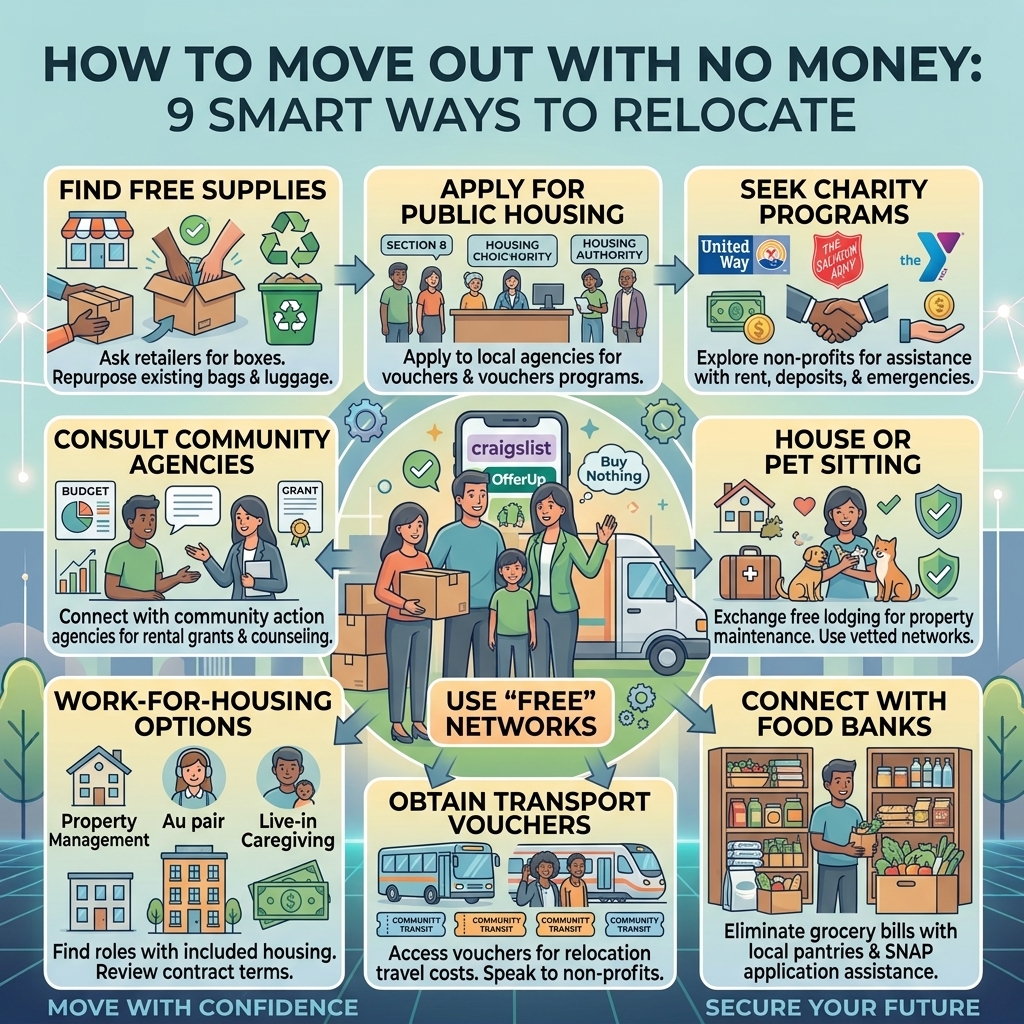
How to Move Out With No Money: 9 Smart Ways to Relocate
Moving out of your current living situation is a major milestone, but it can also be stressful and expensive. Whether you are 18 and leaving your parents’ house for the first time, or an adult dealing with an uncomfortable living environment, the initial costs of moving—security deposits, first month’s rent, movers, and utility hookups—can quickly add up to thousands of dollars.
Many people spend years trapped in uncomfortable or restrictive housing simply because they think they cannot afford to leave. However, with the right strategy, moving on a tight budget is entirely possible.
If you need to relocate but lack a financial safety net, here is a practical, step-by-step breakdown of how to make your move happen safely and affordably.
When Is the Right Time to Move Out?
The average age for young adults to leave their parents’ home in the US is around 19, though many move earlier or later depending on regional costs and career paths. Legally, parental housing obligations end when a child reaches the age of majority (18 in most US states and Europe, though 19 in states like Alabama and Nebraska, and 21 in Mississippi).
[Is your current environment safe?]
        │
        ├── NO  ──> Priority 1: Move immediately via couch surfing,
        │           friend support, or community resources.
        │
        └── YES ──> Priority 2: Optimize your credit, save an emergency buffer,
                    and select a budget-friendly payment path.
If your current home is unsafe, abusive, or hostile, your immediate priority should be getting out safely rather than waiting for ideal finances. However, if you are simply looking for independence, building a small baseline budget first will make your transition much smoother.
Step 1: Assess Your Baseline Financial Health
Before looking at apartments, take an honest look at where your credit score and emergency savings stand.
1. Check Your Credit Score
Landlords use your credit score to evaluate whether you will pay rent on time. While home mortgages often require higher scores, most rental property managers look for a credit score of at least 620.
If your credit history is short or damaged, look into ways to build credit using low-limit starter cards or reported utility payments to prove you are a reliable borrower.
2. Establish a Basic Emergency Fund
If you have a job, start directing every extra dollar into a liquid emergency savings account. A full emergency fund eventually covers 3 to 6 months of basic living expenses (rent, food, transit). When moving out on a shoe-string budget, even a mini-buffer of $500 to $1,000 can protect you from unexpected moving costs or initial utility deposits.
9 Practical Ways to Move Out Without Savings
If you need to move out but do not have extra cash saved up, consider these nine practical routes:
1.Relocate to a Low-Cost Area: Lower your monthly cost floor.
Rental prices vary dramatically by geography. While major urban hubs carry high national average rents, smaller Midwestern and Southern towns offer significantly lower monthly housing costs, making baseline living expenses far more manageable.
2.Apply for Relocation Incentive Programs: Get paid up to $15,000 to move.
Several cities and regional initiatives actively pay remote workers or new residents to move there. Programs like Choose Topeka (Kansas) or Tulsa Remote (Oklahoma) offer cash grants ranging from $2,500 to $15,000 to cover upfront moving costs.
3.Explore Home-Sharing Programs: Trade assistance for free or cheap rent.
Organizations like the National Shared Housing Resource Center pair individuals seeking affordable housing with older homeowners who have extra room and need help with light household chores, companionship, or local errands.
4.Land a Job That Includes Free Housing: Eliminate rent entirely through employment.
Look for employment opportunities that provide room and board as part of your compensation package. Common options include property management, hotel staff, live-in caregiving, seasonal resort work, or long-haul transportation roles.
5.Find Roommates or Sublets: Reduce deposit burdens.
Splitting an apartment with roommates cuts rent, utility bills, and furnishing costs directly in half (or more). Subletting an existing room also allows you to avoid costly initial lease setup fees and long commitments.
6.Hold a Decluttering Sale: Sell unused items fast.
Gather electronics, clothing, and household items you no longer need and sell them on local digital marketplaces like Facebook Marketplace or Craigslist. Turning clutter into immediate cash helps fund your gas, moving truck, or deposit.
7.Leverage Crowdfunding Platforms: Rely on community support.
If you are moving to escape a difficult situation or pursue education, friends, family, and community members are often willing to help. Setting up a GoFundMe campaign or sharing a payment link on social media can help cover initial security deposits.
8.Work Overseas or on Cruise Ships: Work while traveling.
If you have remote skills or want a major change of scenery, working as an English teacher abroad, joining hospitality teams in foreign cities, or working on cruise ships provides housing while allowing you to build up savings.
9.Crash with Friends or Pay Rent to Family: Immediate short-term safety net.
If you need to leave your current situation immediately for safety reasons, ask a trusted friend if you can stay temporarily while you secure employment. Alternatively, if your relationship with your parents is healthy, offer to pay a small monthly rent while saving for your own place.
Typical Moving Expenses vs. Budget Alternatives
Understanding what traditional moving costs look like helps you find ways to bypass or minimize them:
| Expense Category | Average Traditional Cost | Low-Budget Alternative |
| Professional Movers | $800 (Local) to $2,500+ (Long Distance) | DIY with a borrowed truck, or ask friends for help in exchange for pizza |
| Security Deposit | 1 to 2 months’ rent upfront | Look for “no deposit” lease offers or move into an established roommate lease |
| Furnishing & Household Supplies | $1,000 – $2,000 | Source free items on local community groups (e.g., “Buy Nothing” networks) |
| Utility Setup Fees | $100 – $300 in initial deposits | Opt for all-inclusive room rentals where utilities are included in the base rent |
Frequently Asked Questions
What should I do if I can’t afford to move out of my parents’ house?
If you have finished school or started working but cannot afford local rent prices, talk openly with your parents. Offer to pay a modest monthly board contribution while committing a set percentage of your paycheck directly into a dedicated moving savings account.
Which cities or programs pay you to move there?
Popular US locations with active relocation grants or incentives include Tulsa (Oklahoma), Topeka (Kansas), New Haven (Connecticut), Newton (Iowa), and various regional initiatives across Minnesota, Iowa, and Vermont.
Quick Action Checklist
- [ ] Pull Your Credit Report: Ensure your credit score meets the typical 620 threshold for rental applications, and dispute any errors immediately.
- [ ] Audit Your Local Job/Housing Options: Compare room rental prices in your immediate city against surrounding low-cost towns.
- [ ] Sell Unused Belongings: List 5 to 10 items on local online marketplaces to raise quick cash for moving fees.
- [ ] Research Housing Incentive Grants: Check if your current line of work qualifies for remote worker relocation grants like Tulsa Remote or Choose Topeka.
Disclaimer: The content on this website is for informational and educational purposes only and should not be construed as professional financial, investment, tax, or legal advice. I am not a licensed financial advisor. While I strive to keep the information accurate and up to date, financial markets and laws change frequently. Always consult with a qualified financial professional before making any financial or investment decisions based on the information provided on this site.