
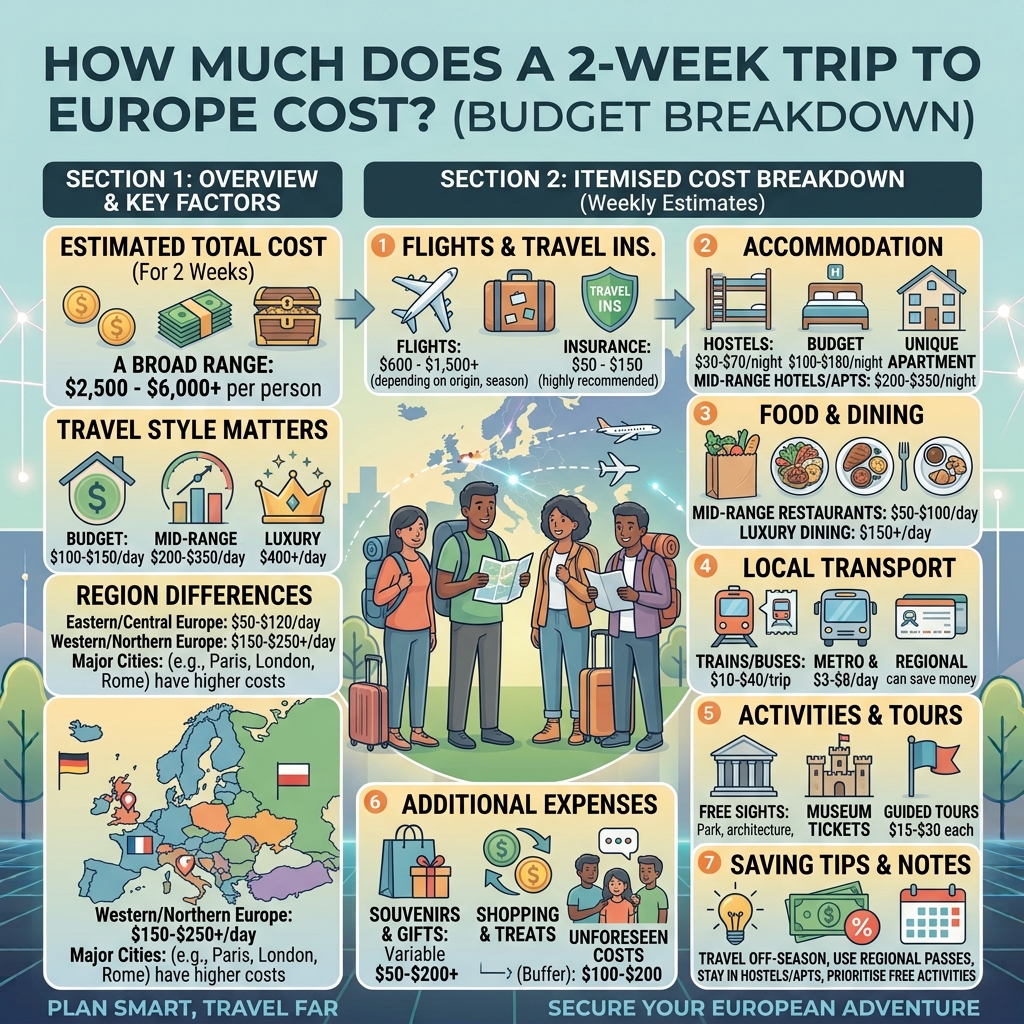
How Much Does a 2-Week Trip to Europe Cost? (Budget Breakdown)
A two-week vacation to Europe is a bucket-list dream for millions of travelers. From the historic ruins of Rome and the sun-soaked beaches of Greece to the bustling streets of Barcelona and the fairytale towns of Germany, the continent offers an incredible fusion of history, culture, and cuisine.
However, many travelers hold off on booking their dream trip because they assume European travel is prohibitively expensive.
The truth? A 2-week trip to Europe is far more affordable than most people think—if you know how to budget. While a luxury getaway can easily run upwards of $5,000, a budget-conscious traveler can explore Europe comfortably for $2,000 to $3,000 total, including transatlantic flights, accommodation, food, public transit, and landmark tickets.
Here is a realistic cost breakdown for a 2-week European trip, along with actionable ways to stretch every dollar.
At a Glance: Estimated 2-Week Europe Budget
| Expense Category | Daily Average (Per Person) | Total Estimated Cost (14 Days) |
| Transatlantic Flights (US to Europe) | N/A | $500 – $800 |
| Accommodation (Mid-range / Split Twin) | $50 – $100 | $700 – $1,400 |
| Food & Dining | $30 – $50 | $420 – $700 |
| Intercity & Local Transportation | $15 – $25 | $210 – $350 |
| Sightseeing & Museum Entry Fees | $10 – $20 | $140 – $280 |
| ESTA / ETIAS Authorization Fee | N/A | ~$25 |
| ESTIMATED TOTAL | $105 – $195 / day | $2,000 – $3,555 |
When Is the Best Time to Visit Europe on a Budget?
Seasonality plays the single largest role in how much your trip will cost.
[SUMMER (June–August)] ──────> Peak Prices / Heavy Crowds / Scorching Heat
[SHOULDER (May & Sept–Oct)] ──> Moderate Rates / Ideal Weather / Manageable Crowds (BEST VALUE)
[WINTER (Nov–March)] ────────> Lowest Rates / Fewest Crowds / Cold Weather (Excl. Holidays)
- Peak Season (June to August): European hotels make up to 32% of their annual revenue during July and August alone. High demand drives up flight, train, and hotel rates, while tourist crowds peak across major hubs. August is also traditional holiday month across Europe, meaning some local-owned shops close down.
- Shoulder Season (April to May & September to October): The sweet spot for travel. You will enjoy mild weather, shorter lines at major landmarks like La Sagrada Famiglia or the Colosseum, and significantly reduced hotel and flight rates.
- Low Season (November to March): The cheapest time to fly and stay in Europe (excluding Christmas/New Year holidays). While Western and Northern Europe can be chilly, Southern European destinations like Portugal, Southern Spain, and Sicily remain relatively mild.
Detailed Cost Breakdown for 2 Weeks in Europe
1. Transatlantic & Intercity Transportation
- Flying from the US: The most budget-friendly gateway cities to fly into from the US are London, Madrid, Barcelona, Rome, Lisbon, and Dublin. Roundtrip flights departing out of major East Coast hubs (NYC, Boston, Washington D.C., Miami) typically cost $500 to $800 during shoulder season.
- Getting Around Europe: Avoid expensive taxis. European public transit (metros, regional trains, and buses) is world-class. For travel between countries, budget airlines like RyanAir, EasyJet, and WizzAir offer short 2-hour flights often priced under $50—just be mindful of strict carry-on luggage rules.
2. Accommodation
Accommodation will likely be your single largest line item.
- 3-to-4-Star Hotels / Private Airbnbs: Expect to pay $50 to $100 per night for a comfortable double or twin room when booked a few months in advance.
- Regional Differences: A mid-range hotel room in Southern/Eastern Europe (e.g., Portugal, Greece, Montenegro) costs a fraction of a similar room in Switzerland, France, or Scandinavia.
3. Food & Dining
Food costs vary drastically depending on the country and your dining habits:
- Southern/Eastern Europe (Portugal, Spain, Greece, Montenegro): A casual meal at a local tavern costs $10 to $15 per person. A traditional gyro or street food snack in Greece costs under $4.
- Western/Northern Europe (France, Netherlands, Switzerland): Mid-range sit-down dinners average $30 to $60+ per person.
- Money-Saving Hack: Visit local fresh food markets (like Barcelona’s La Boqueria) to grab charcuterie boards, fresh fruit, and fresh bread for cheap lunch picnics.
                    [Where Are You Eating Today?]
                                  │
       ┌──────────────────────────┴──────────────────────────┐
  TOURIST SQUARE                                      NEIGHBORHOOD SIDE STREET
  • Premium prices + hidden cover fees                • Authentic regional recipes
  • Microwave/generic menus                           • Fresh local ingredients
  • Staff rushing turnover                            • Standard, fair pricing
5 Essential Budget-Saving Rules for Europe
1.1. Search Flights Incognito & Fly Mid-Week:Avoid surge pricing traps.
Airlines track browser cookies and may adjust prices based on search volume. Clear your browser history, search in private mode, and select Tuesday or Wednesday departures to secure lower fares.
2.2. Dine Away from Tourist Landmarks:Protect your food budget.
Never eat at restaurants directly facing major plazas, cathedrals, or famous monuments. Walking just 2 to 3 blocks away into residential neighborhoods will yield better food quality at half the price.
3.3. Understand European Tipping Etiquette:Skip unnecessary service charges.
Unlike in North America, server wages in Europe are built into base pay rates. Tipping 15% to 20% is not required. Rounding up your bill to the nearest euro or leaving 5%–10% for exceptional service is customary and appreciated.
4.4. Claim VAT Refunds on Shopping:Reclaim your taxes at the airport.
Non-EU residents can reclaim the Value-Added Tax (VAT) on major retail purchases over a minimum threshold (e.g., €50 in Greece). Ask for a “TAX-Free” invoice at checkout, get it stamped at airport customs before departure, and receive a cash or card refund starting around 5% to 12%.
5.5. Reserve Sightseeing Tickets Months Ahead:Pre-book high-demand sites.
Popular attractions (such as the Vatican Museums, the Louvre, or La Sagrada Famiglia) enforce timed entry slots. Purchasing 2 to 3 months in advance guarantees entry and saves you expensive last-minute skip-the-line reseller fees.
Frequently Asked Questions
Do I need to carry cash, or are credit cards accepted?
Credit and debit cards (Visa and Mastercard) are widely accepted across almost all European businesses, including public transport, cafes, and museums. However, carrying €20 to €50 in local currency cash is recommended for small bakery purchases, public restrooms, or tipping tour guides. Always choose to be charged in the local currency (Euros) rather than USD at card terminals to avoid dynamic currency conversion fees.
Do US citizens need a visa to enter Europe?
US passport holders traveling for tourism do not need a traditional visa for short stays (under 90 days) within the European Schengen Area. However, travelers must complete an online travel authorization via the ETIAS (European Travel Information and Authorisation System) system prior to departure, which incurs a small processing fee (~€7 / $8 USD).
Quick Action Checklist
- [ ] Set Up Price Alerts: Track transatlantic flight routes on Google Flights or Skyscanner 3 to 6 months before your target dates.
- [ ] Verify ETIAS Requirements: Ensure your passport has at least 6 months of validity remaining beyond your planned return date.
- [ ] Notify Your Bank: Check if your credit cards charge foreign transaction fees (aim to use cards with 0% foreign transaction fees).
- [ ] Book Key Landmarks Early: Secure time-slotted tickets for top-tier museums and historical sites online.
Disclaimer: The content on this website is for informational and educational purposes only and should not be construed as professional financial, investment, tax, or legal advice. I am not a licensed financial advisor. While I strive to keep the information accurate and up to date, financial markets and laws change frequently. Always consult with a qualified financial professional before making any financial or investment decisions based on the information provided on this site.