Save for a Car: The Ultimate Beginner’s Guide to Buying Your Next Ride
Few things match the feeling of taking the keys to your very first car. Whether you are driving off the dealer’s lot in a shiny new model or picking up a reliable used vehicle, owning a car represents ultimate independence.
However, walking into a showroom and paying cash out of pocket is not realistic for most people. Buying a car requires planning, discipline, and a solid strategy. Whether you are a teenager working your first job or an absolute beginner setting your sight on a new set of wheels, this guide breaks down how to save for a car without blowing your budget or drowning in debt.
Step 1: Compare Your Car Payment Options
Before you start looking at vehicle models, you need to know how you will actually pay for the purchase. The four primary ways to finance a vehicle globally each come with distinct trade-offs:
[Vehicle Purchase] ──┬──> 1. Cash (Zero Interest / Complete Ownership)
                     ├──> 2. Car Finance / Auto Loan (Secured against vehicle)
                     ├──> 3. Personal Unsecured Loan (Fixed rates based on credit score)
                     └──> 4. Credit Card (High risk / Processing fees apply)
1. Cash (The Stress-Free Route)
Paying cash is the cleanest way to buy a vehicle. You hand over the funds, receive the title, and own the car completely with zero monthly debt and zero interest charges.
- The Catch: It requires significant patience to build up the necessary savings, and you must ensure you don’t drain your emergency cash reserves to do it.
2. Dedicated Car Finance (Auto Loans)
In many countries, upwards of 80% to 90% of new car buyers use dealership finance. The loan is secured directly against the vehicle.
- How it works: You pay an initial down payment (usually around 20% for a new car) and make fixed monthly repayments over two to five years.
- The Catch: You do not legally own the car until the final payment is made. Finance agreements often come with mileage caps, strict condition rules, and interest charges.
3. Personal Loans
You can apply for an unsecured personal loan from a bank or digital lender to buy the vehicle outright.
- How it works: You borrow a specific amount and pay it back in fixed monthly installments over a set period.
- The Catch: Your interest rate depends heavily on your credit rating—an official score that shows lenders how reliably you pay back borrowed money.
4. Credit Cards
While some buyers use credit cards to cover the initial down payment (or purchase a cheap used car), this route requires extreme caution.
- The Catch: Dealerships often charge a processing fee of 1% to 3.5% for credit card transactions. Furthermore, if you do not pay off the balance before your grace period ends, high interest rates will quickly make the car far more expensive. High card balances also hurt your credit utilization ratio.
Step 2: Decide Between New vs. Used
One of the biggest choices you will make when learning how to save for a car is deciding whether to buy a brand-new vehicle or a pre-owned one.
| Factor | Brand-New Vehicle | Used Vehicle |
| Upfront Cost | High (Requires ~20% down payment) | Significantly lower |
| Depreciation | Drops up to 20%–30% in year one | Major value drop has already happened |
| Insurance Cost | Higher monthly premiums | Lower monthly premiums |
| Reliability | Excellent (Includes factory warranty) | Varies (May require more maintenance) |
Pro-Tip on Trade-Ins: If you already own an older vehicle, trading it in at the dealership can act as a instant credit toward your down payment, reducing the cash you need to save out of pocket.
Step 3: Proven Ways to Save for a Car Fast
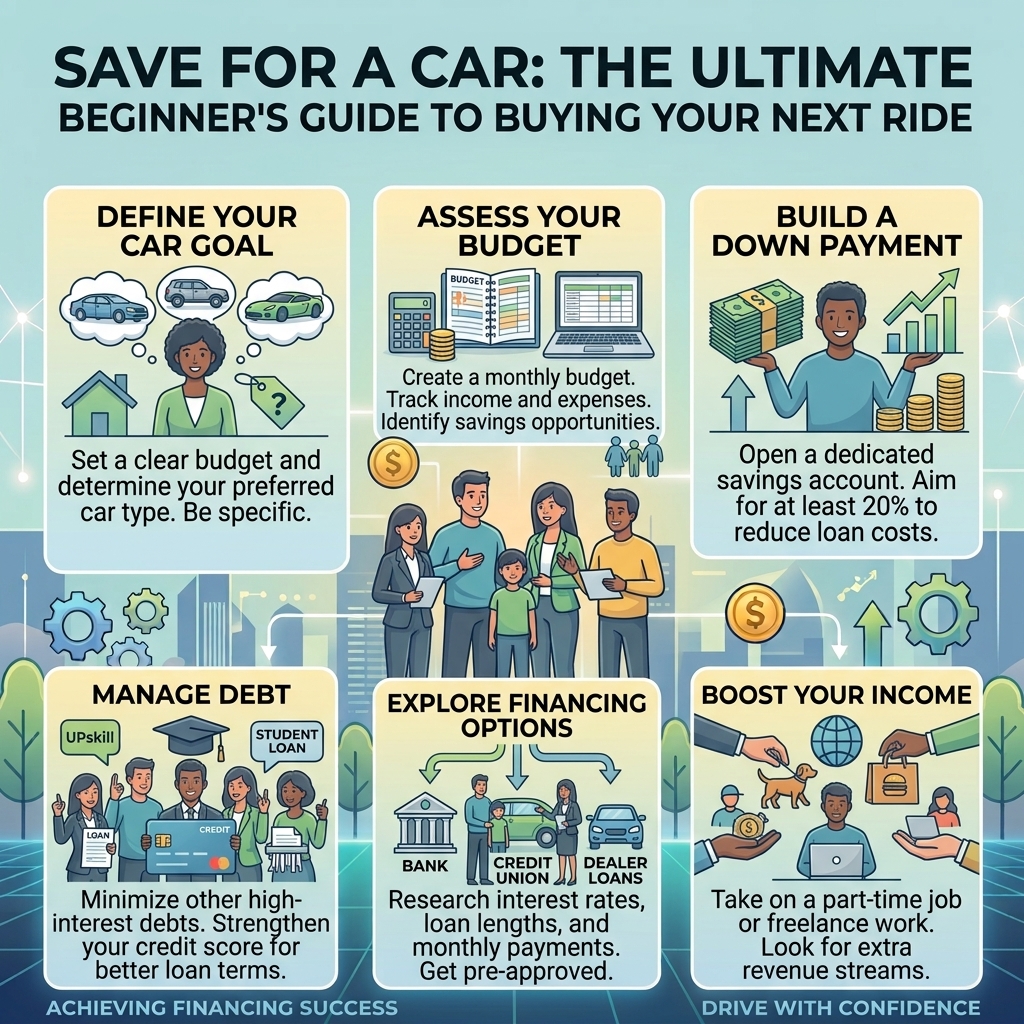
If you want to speed up your savings timeline, implement these four simple habits:
1.Calculate Total Costs & Target: Build your baseline budget.
Do not just save for the sticker price. Factor in mandatory dealer fees, taxes, registration, vehicle insurance, and routine fuel costs to set your target goal.
2.Pay Yourself First: Automate on payday.
Set up an automatic transfer on the day you get paid to move a fixed amount into a separate savings account. Do not rely on saving “whatever is left over” at the end of the month.
3.Audit Daily Spending: Cut hidden leaks.
Review your daily expenses. Packing lunch instead of buying takeout and cutting unused subscriptions can easily free up $100 to $200 every month for your vehicle fund.
4.Redirect All Extra Cash: Add extra streams.
Deposit tax refunds, birthday gifts, work bonuses, or side-hustle earnings directly into your car savings account to reach your goal months ahead of schedule.
Case Studies: Two Savings Approaches
Scenario A: Jordan’s Methodical Used Car Plan
Jordan wanted to buy a reliable used car priced at $6,000. He earned a modest income and wanted to avoid monthly debt payments entirely.
- The Strategy: Jordan opened a dedicated high-yield savings account. He automated a $300 monthly transfer from his paycheck and took on a weekend freelancing side hustle that brought in an extra $200 a month. He also deposited a $500 tax refund straight into the fund.
- The Result: In just 11 months, Jordan saved the entire $6,000. He bought the car in cash, avoiding interest charges and loan stress completely.
Scenario B: Taylor’s Rush to Finance
Taylor wanted a brand-new car right away. Without building a budget or saving for a down payment, she financed the entire $25,000 purchase price through a dealership.
- The Strategy: Taylor took on a six-year auto loan with zero down payment and an 8% interest rate.
- The Result: Because she financed 100% of the vehicle, her monthly payments were high. Combined with high full-coverage insurance premiums, Taylor struggled to make her monthly payments and ended up paying over $6,000 in extra interest over the life of the loan.
Frequently Asked Questions
Should I lease a car or buy it?
Leasing is essentially long-term renting. It offers lower monthly payments and allows you to drive newer cars every few years, but it comes with strict annual mileage limits, wear-and-tear fees, and zero equity ownership at the end. Buying takes longer to save for, but it gives you an asset you fully own.
How can a teenager save for a car?
As a teenager, start by getting a part-time job or picking up local side jobs (like yard care, babysitting, or tutoring). Open a dedicated savings account, set a realistic target for a reliable used car, and save at least 50% of every paycheck before spending money on entertainment.
Quick Action Checklist
- [ ] Determine Your Target: Research the total purchase price (including tax and insurance) for the vehicle model you want.
- [ ] Pick Your Payment Strategy: Decide whether you are saving for a full cash purchase or a 20% down payment for a loan.
- [ ] Open a Dedicated Savings Account: Keep your car money separate from your daily spending cash to avoid temptation.
- [ ] Automate Your Savings: Set up an automatic transfer on every payday to build your fund effortlessly.