
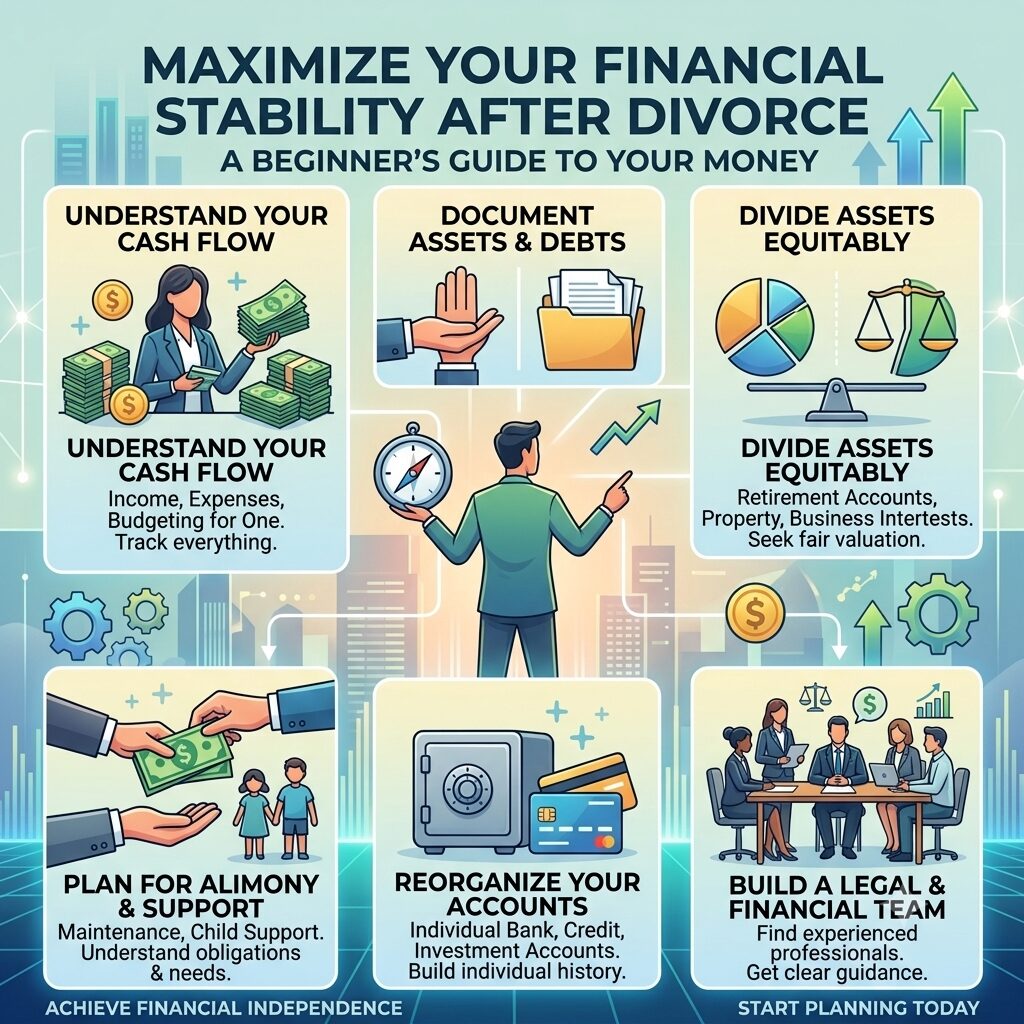
Divorce Financial Planning: A Beginner’s Guide to Your Money
Going through a family split is incredibly tough. It is a massive emotional rollercoaster, but it is also one of the biggest financial events a person can experience. When two lives untangle, their money has to untangle too.
Thinking about the financial side of a split does not mean you are being cold or cynical. In fact, taking control of your money before, during, or after a major relationship shift is an act of self-care. It provides the stability you need to make clear decisions for your future. Whether you are a young adult trying to understand how adult relationships manage money, or an absolute beginner facing a separation, this guide breaks down divorce financial planning into simple, actionable steps.
Why Financial Planning Matters During a Split
When couples combine their lives, they usually combine their finances. They buy things together, share bank accounts, and take on debt as a team. If the relationship ends, all of those shared pieces must be separated.
Without a clear plan, separating your money can quickly turn into chaos. One person might end up holding all the debt, while the other loses access to basic funds.
The Golden Rule of Separating Money: Clarity equals safety. The more accurate your paperwork is, the easier it is to protect your financial health and build a stable, independent future.
Taking control of your finances gives you options. In some cases, opening up honest communication about money can even help a struggling couple find stability and reconcile. But if a split is the healthiest path forward, being prepared ensures you won’t be trapped in an unhappy situation simply because you feel you cannot afford to leave.
Step 1: Track What You Own and What You Owe
The very first phase of financial planning is to take a complete inventory of your financial life. You need to look at two distinct categories: assets (things that are worth money) and liabilities (money you owe to others).
1. Tally Your Assets
An asset is anything of value that you own. In a partnership, these are often split down the middle, depending on local laws. Write down everything, including:
- Cash in shared and personal bank accounts.
- Physical property like a house, car, or electronic equipment.
- Long-term savings, like investment portfolios or employer-sponsored retirement plans.
2. Tally Your Debts (Liabilities)
Just as assets are shared, debts are often shared too. You need to know exactly what needs to be paid off. Look closely at credit card balances, car loans, personal loans, and mortgages.
To get an accurate picture of your debts, print out a fresh copy of your credit rating report. A credit report is an official document that lists every loan or credit line open in your name. If communication has broken down in a relationship, one partner might practice “financial cheating”—like opening secret credit cards or draining shared savings accounts. Checking your report ensures there are no hidden financial surprises waiting for you.
Step 2: The Document Collection Checklist
When you untangle a financial life, you cannot rely on memory or verbal promises. You need paper proof. Start gathering these essential documents immediately and keep copies in a safe, private place:
1.Gather Income Proof:Pay stubs & tax returns.
Collect your last three months of pay slips and your tax returns from the past two years. This proof of earnings is vital if you need to arrange child support, apply for a new apartment lease, or get a loan in your own name.
2.Check Property Titles:Deeds & registrations.
Look at the official ownership paperwork for cars, homes, or land. Make sure the names on the deeds are accurate. Sometimes one person assumes they own a vehicle entirely, but legally it belongs to both partners.
3.Review Protection Policies:Insurance & wills.
Check the beneficiary details (the people who get the money if something happens to you) on life insurance policies, health coverage, and wills. It is much easier to update these rules while you are still legally together than after a split.
Global Reality: How Rules Change Around the World
Money laws vary depending on where you live. When you are looking at shared property, local legal systems generally view marital assets in one of two ways.
- Community Property / Equal Split: In places like certain US states or parts of Europe, almost everything earned or bought during the marriage belongs to both people equally, no matter who paid for it.
- Equitable Distribution / Fair Split: In countries like the UK, Canada, Australia, and many other US states, the courts look at what is “fair” rather than a strict 50/50 split. They weigh factors like who looks after the kids and who has the higher earning potential.
Here is a quick reference guide to how financial systems handle splits across different regions:
| Country | System Type | Retirement Plan Rules | Credit System Impact |
| United States | Varies by State | Split via a QDRO legal order | Joint accounts impact individual scores |
| United Kingdom | Fair Split (Equitable) | Pension sharing or offsetting | Connected credit via joint accounts |
| Canada | Equalization of Assets | CPP credits can be split equally | No joint credit scores, but joint debts apply |
| Australia | Superannuation Splitting | Super funds can be divided | Separate files, but joint liability remains |
Case Studies: Two Financial Journeys
Let’s look at how two different people navigated the financial realities of a relationship split.
Scenario A: Alex’s Organized Transition
Alex realized his marriage was no longer working. Instead of rushing out the door, he spent three months quietly practicing smart divorce financial planning.
- The Action: Alex printed out his credit report, discovered a joint store card he had forgotten about, and closed it. He gathered copies of his tax documents and opened a new, private bank account at a completely different financial institution.
- The Result: When it came time to split, Alex had zero hidden surprises. Because he had clear documentation of his earnings, he secured a small apartment lease within two weeks and avoided a messy, expensive legal battle over missing paperwork.
Scenario B: Sarah’s Unprepared Departure
Sarah left a troubled relationship abruptly during a big argument. She packed her bags but left all financial files behind.
- The Action: Sarah didn’t know how much debt was attached to their shared credit cards. Because her name was still on the car loan her ex-partner drove, she was held responsible when he stopped making the payments.
- The Result: Sarah’s credit rating dropped significantly due to the missed car payments. It took her over two years of stressful legal letters and extra fees to sort out the paperwork and clean up her financial record.
Pro-Tips for Building Financial Independence
- Build an Emergency Cash Fund: Start setting aside small amounts of cash in an account that only you can access. Having even a basic cash safety net prevents you from making desperate financial compromises.
- Establish Separate Credit: If all your bills and cards have always been in your partner’s name, you might not have a credit history of your own. Open a basic credit card or store card in your name only, pay it off in full every month, and start building your own independent financial reputation.
- Secure Health Coverage: A split can sometimes mean losing access to a partner’s health insurance policy. Check with your employer or local health authority to see what options you have to set up your own coverage immediately.
Common Pitfalls to Avoid
Ignoring Joint Debt Liability
Just because a relationship ends doesn’t mean your contract with the bank ends. If your name is on a joint mortgage or credit card, the bank does not care if you have split up. If your ex-partner refuses to pay, the bank will come after you for the money, which can ruin your personal credit rating. Always work to close joint lines of credit as quickly as possible.
Forgetting the Emotional Cost
Divorce is physically, mentally, and financially draining. Do not try to handle it entirely on your own. Budget for professional help—whether that means a family therapist to help ease the tension for you and your kids, or a clear-headed financial educator.
Quick Action Checklist
If you are facing a separation or want to ensure your financial independence, complete these four steps:
- [ ] Pull Your Credit Report: Download a free copy of your credit report to check for any unknown or forgotten joint debts.
- [ ] Map Your Inventory: Create a simple spreadsheet listing every major asset you own and every debt you owe.
- [ ] Create a Secure Document Box: Gather your pay stubs, tax returns, and property deeds, and store copies in a secure digital folder or physical box only you can access.
- [ ] Open Independent Accounts: Set up a new everyday bank account at a completely different bank than the one your partner uses to keep your future income separate.
Disclaimer: The content on this website is for informational and educational purposes only and should not be construed as professional financial, investment, tax, or legal advice. I am not a licensed financial advisor. While I strive to keep the information accurate and up to date, financial markets and laws change frequently. Always consult with a qualified financial professional before making any financial or investment decisions based on the information provided on this site.